TETHER

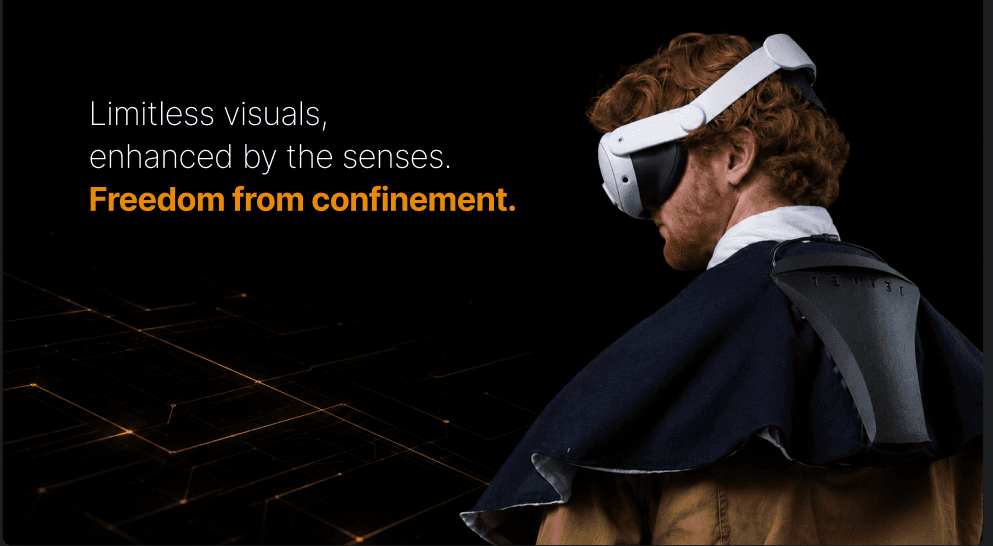
A VR and haptic wearable system for psychological grounding in isolated, confined, and extreme environments.

A VR and haptic wearable system for psychological grounding in isolated, confined, and extreme environments.

Role: VR Developer | Hardware Engineer | UI Desiginer | Researcher.

Tools: Unity 6.3 URP | Meta Quest 3 | XR Hands | Arduino Nano ESP32 | Figma
The Problem

People in isolated, confined, extreme environments experience slow psychological erosion. There's no single moment of collapse — the erosion is slow and silent, and almost nothing is designed to address it.

1
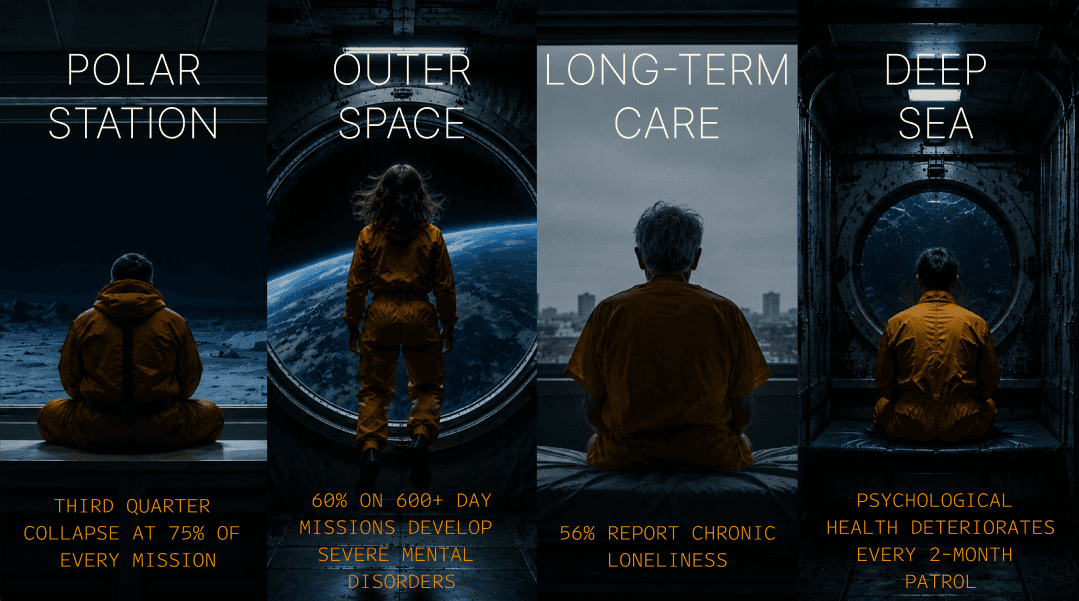
70% of long-duration missions experience a psychological collapse before the end.

For these populations, confinement isn't temporary. The environment makes connection structurally impossible.

Bridging the Gaps

Every existing intervention is a partial answer. Tether is the first to put all five in the same system.

2

Conceptualization
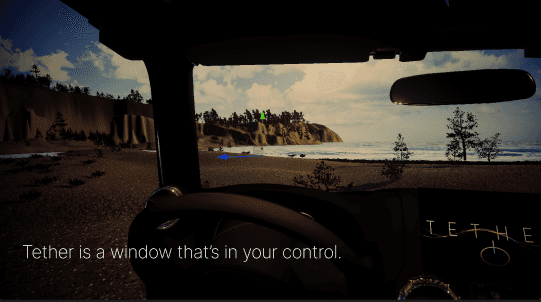
This isn't a metaphor for the experience — this IS the experience. A car interface removes the learning curve of VR. The wearable makes the body believe it.


A car is the most universally understood autonomy machine in human culture. The Jeep gives users somewhere else to go, and they choose the direction.

This isn't a metaphor for the experience — this IS the experience. A car interface removes the learning curve of VR. The wearable makes the body believe it.


A car is the most universally understood autonomy machine in human culture. The Jeep gives users somewhere else to go, and they choose the direction.

3

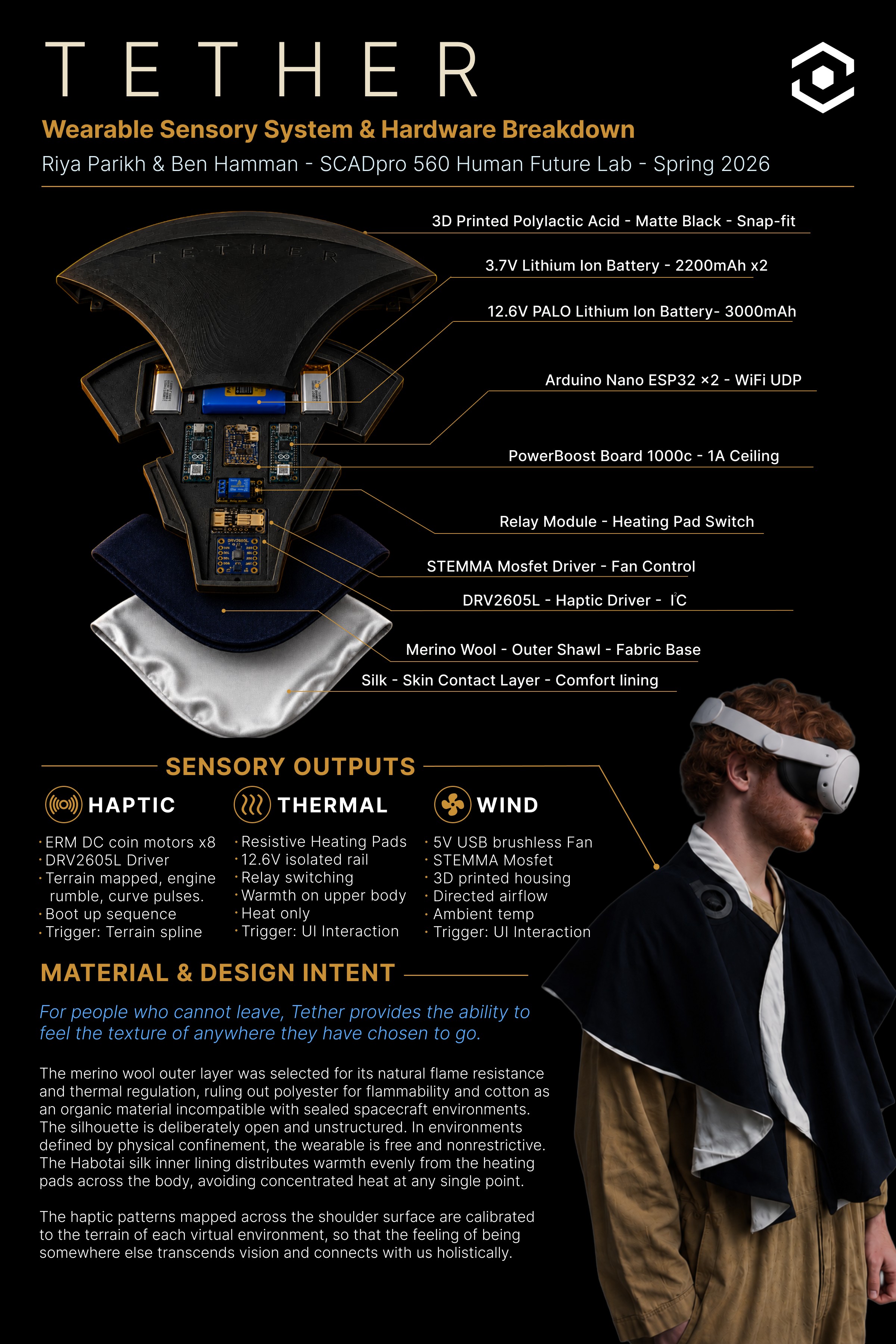
The Hardware

4

VR Experience

Mechanics

Locomotion:

Hand tracking, spline-based autopilot drive

Interactions:

Poke + touchscreen GPS

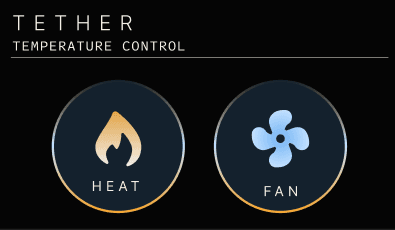
Environment/ UI control:

2 biomes, fully user-directed (destination, time of day, weather)

5

Concept Validation

6

Ethics
6

Status

Speculative proof-of-concept | SCAD Human Futures Lab, Spring 2026 | Riya Parikh & Ben Hamman

6

Next Questions:

1. At what point does immersive restoration become dependency, and how should autonomy-first design account for that risk in vulnerable populations?

2. What ethical frameworks need to exist before embodied VR interventions can be deployed responsibly in clinical or extreme environment contexts?

3. Does embodied sensation measurably change psychological outcomes for people in long-term confinement — and what is the minimum effective dose?